Reliable Website Development Services for Business Growth
June 23, 2026
Website Maintenance: Protects Your Business Investment
July 13, 2026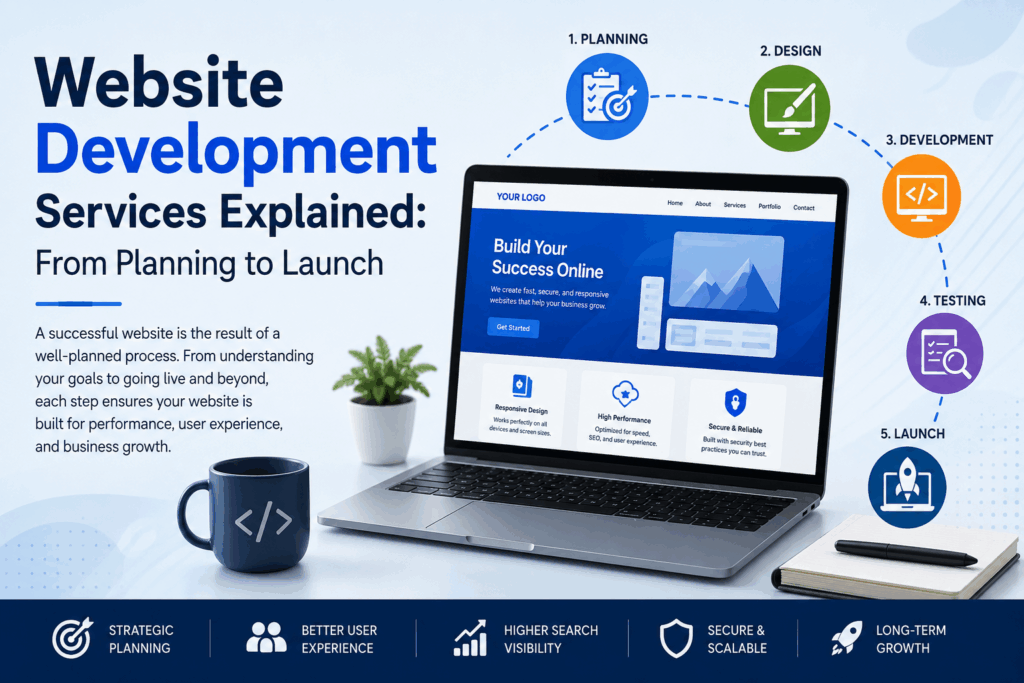
A professional website is more than just a collection of web pages. It is a powerful business tool that helps attract customers, build trust, and support business growth. However, creating an effective website involves much more than choosing a design and publishing it online.
In fact, website development services cover every step of the process-from understanding business goals to launching a fully functional website. Knowing how this process works can help business owners make informed decisions and achieve better results from their online presence.
Understanding the Business Requirements
Every successful website starts with proper planning. First, before any design or coding begins, website developers gather information about the business, its target audience, and its objectives.
This stage typically includes:
- Identifying business goals
- Understanding customer needs
- Researching competitors
- Defining website features and functionality
- Creating a project timeline
As a result, a clear plan helps ensure that the website is built to support specific business goals rather than simply looking attractive.
Website Planning and Structure
Next, once the requirements are clear, developers create a website structure that organizes content logically and improves user experience.
Planning often involves:
- Creating sitemaps
- Defining navigation menus
- Organizing pages and content
- Mapping user journey
Additionally, a well-planned structure helps visitors find information quickly while improving search engine visibility.
Designing the User Experience
Furthermore, website design focuses on creating a visually appealing and user-friendly experience. Professional website development services ensure that the design reflects the company’s brand identity while making navigation simple and intuitive.
Key design considerations include:
- Responsive layouts for mobile devices
- Consistent branding and colors
- Clear calls-to-action
- Fast-loading design elements
- Easy-to-read typography
The goal is to create a website that encourages visitors to stay longer and take action.
Front-End Development
Afterward, once the design is approved, developers begin building the front-end of the website. This is the part visitors interact with directly.
Front-end development includes:
- Building page layouts
- Creating responsive designs
- Implementing interactive features
- Optimizing website speed
- Ensuring compatibility across devices and browsers
This stage transforms design concepts into a functional website interface.
Back-End Development
Meanwhile, the back-end serves as the foundation that powers the website behind the scenes. It manages data, user interactions, and website functionality.
Back-end development may involve:
- Database creation
- Content management system(CMS) setup
- User account functionality
- Form processing
- Security implementation
Therefore, without a reliable back-end, even the most attractive website may struggle to perform efficiently.
Content Integration
A website’s content plays a major role in engaging visitors and improving search engine rankings.
At this stage, developers and content creators add:
- Text content
- Images and graphics
- Videos
- Contact forms
- Service pages
- Blog posts
Moreover, content should be informative, relevant, and optimized for both users and search engines.
Testing and Quality Assurance
Before launch, the website undergoes extensive testing to ensure everything functions correctly.
Quality assurance checks may include:
- Mobile responsiveness testing
- Browser compatibility testing
- Page speed analysis
- Link verification
- Security testing
- Form functionality checks
As a result, identifying and fixing issues before launch helps create a better user experience and prevents potential problems.
Website Launch
Once testing is complete, the website is ready to go live. This stage involves transferring the website to its hosting environment and making it accessible to the public.
The launch process often includes:
- Domain connection
- Hosting configuration
- Final performance checks
- Search engine indexing setup
- Website backups
A successful launch ensures visitors can access the website smoothly from day one.
Ongoing Maintenance and Support
Website development does not end after launch. Regular maintenance helps keep the website secure, fast, and up to date.
Common maintenance tasks include:
- Software updates
- Security monitoring
- Performance optimization
- Content updates
- Bug fixes
- Backup management
Continuous support helps businesses maintain a professional online presence and adapt to changing customer needs.
Why Professional Website Development Services Matter?
Many businesses underestimate the complexity of building an effective website. Professional website development services combine strategy, design, development, testing, and ongoing support to create a website that delivers real business value.
A professional developed website can:
- Improve credibility and trust
- Enhance user experience
- Increase online visibility
- Generate more leads and inquiries
- Support long-term business growth
Ready to Build a Website That Works for Your Business?
Whether you’re launching your first website or upgrading an existing one, professional website development services can help turn your ideas into a high-performing online presence. Contact RYPACI IT Solutions today to discuss your project and discover how a custom-built website can help your business succeed online.